
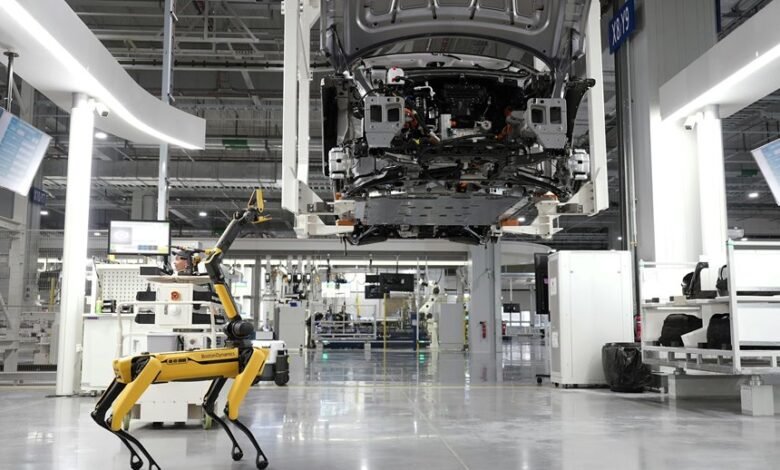
Digital automation systems are witnessing notable growth, driven by advancements in artificial intelligence and data analytics. These technologies streamline processes and enhance decision-making capabilities. As businesses increasingly adopt automation, they experience improved operational efficiency and reduced costs. However, this shift also transforms workforce dynamics, requiring skill adaptation. Understanding the nuances of this evolution is crucial for organizations aiming to maintain competitiveness in a rapidly changing landscape. What implications will this have for the future of work?
The Rise of Digital Automation Systems: Key Factors Behind Growth
As industries increasingly seek efficiency and cost reduction, the rise of digital automation systems has become a pivotal trend in modern business operations.
This growth is driven by technology adoption, as organizations leverage advanced software and robotics to streamline processes.
Enhanced data analytics capabilities facilitate informed decision-making, while the integration of artificial intelligence fosters innovation, ultimately promoting a competitive edge and operational agility in the marketplace.
How Automation Enhances Operational Efficiency and Productivity
While many organizations strive to enhance operational efficiency and productivity, the implementation of automation technologies serves as a transformative solution.
By facilitating process optimization, automation reduces bottlenecks and streamlines workflows. Furthermore, it enhances resource allocation, ensuring that personnel and materials are utilized effectively.
Consequently, organizations experience increased output and reduced operational costs, fostering a more agile and responsive business environment.
The Impact of Digital Automation on the Workforce and Job Roles
A significant transformation in the workforce and job roles is evident as digital automation technologies become increasingly prevalent across various industries.
This shift prompts job displacement in routine tasks, necessitating a corresponding skill evolution. Workers must adapt to new technological tools and processes, emphasizing the need for continuous learning and upskilling to thrive in an increasingly automated environment, ensuring long-term employment viability.
Future Trends in Digital Automation Systems: What to Expect?
Given the rapid advancements in technology, future trends in digital automation systems are poised to reshape numerous sectors significantly.
Key developments will include enhanced AI integration, allowing for more intelligent decision-making processes, and the widespread adoption of predictive analytics, which can forecast trends and optimize operations.
Together, these innovations will empower organizations to improve efficiency and adaptability in an increasingly dynamic marketplace.
Conclusion
In conclusion, the growth of digital automation systems signifies a pivotal shift in operational dynamics across industries, driven by technological advancements. As businesses increasingly adopt these solutions, the necessity for workforce adaptation becomes evident. One must consider: can organizations truly thrive in an era defined by automation without prioritizing continuous skill development? The future of work hinges on this critical balance, as companies navigate the complexities of integrating automation while fostering an agile and skilled workforce.